Introduction to Food Microbiology and Safety
Why Don’t Lactic Acid Bacteria Have Heme? Unveiling the Unique Characteristics of Catalase-Negative Bacteria
In this article, we’ll delve into a unique question in microbiology: Why don’t lactic acid bacteria have heme, and how does this relate to their catalase-negative nature? Understanding this distinct trait sheds light on the metabolic adaptations that enable these bacteria to thrive in various environments without relying on heme-dependent enzymes like catalase.
The Role of Heme in Bacterial Metabolism
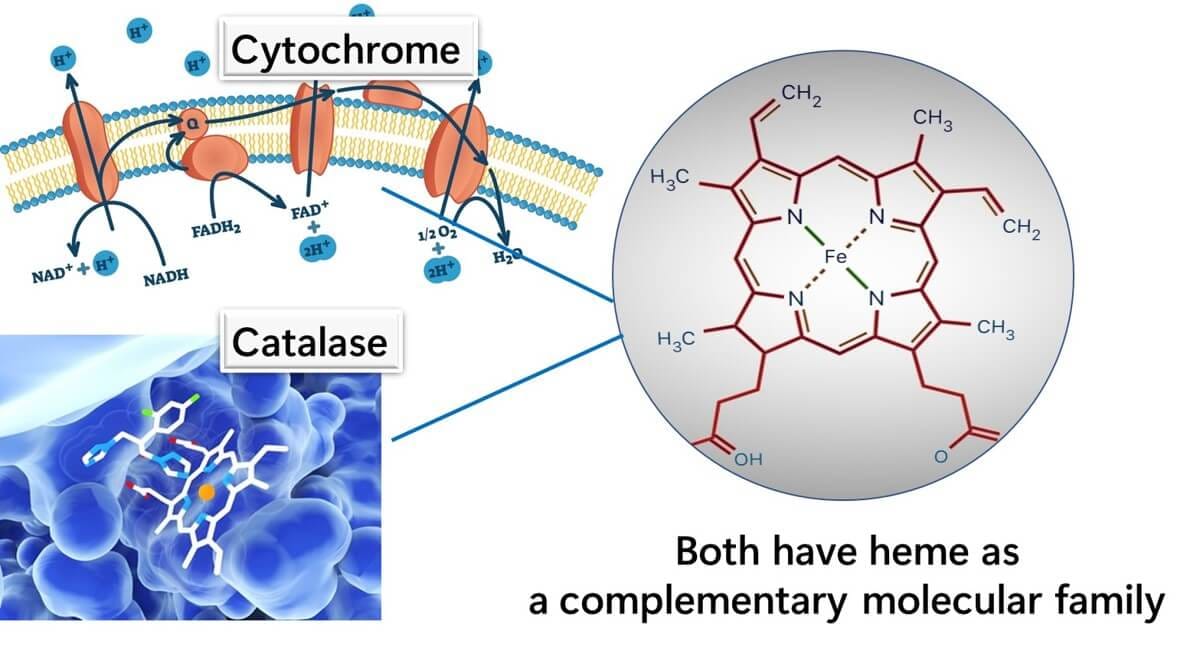
Most bacteria utilize the electron transport chain as part of aerobic respiration, and within this system lies the crucial component, cytochrome, which contains a heme structure. This heme-based cytochrome is essential for electron transport and energy production, supporting cellular growth in an oxygen-rich environment. For bacteria that engage in aerobic respiration, heme is therefore vital.
Lactic Acid Bacteria’s Unique Metabolism
Unlike many other bacteria, lactic acid bacteria exclusively rely on lactic acid fermentation for their energy needs, bypassing the electron transport chain altogether. Because they do not use this chain, they lack cytochrome and therefore do not require heme. Their growth and survival depend entirely on fermentation, making them unique among Gram-positive bacteria.
Why Lactic Acid Bacteria Lack Catalase
Since catalase also depends on heme to function, the absence of heme in lactic acid bacteria means they cannot produce catalase. Catalase typically breaks down harmful hydrogen peroxide into water and oxygen. Instead of catalase, lactic acid bacteria use an alternative enzyme called NADH peroxidase, which incorporates FAD (flavin adenine dinucleotide) rather than heme, to neutralize hydrogen peroxide. This adaptation allows lactic acid bacteria to survive without a heme-dependent mechanism.
Conclusion
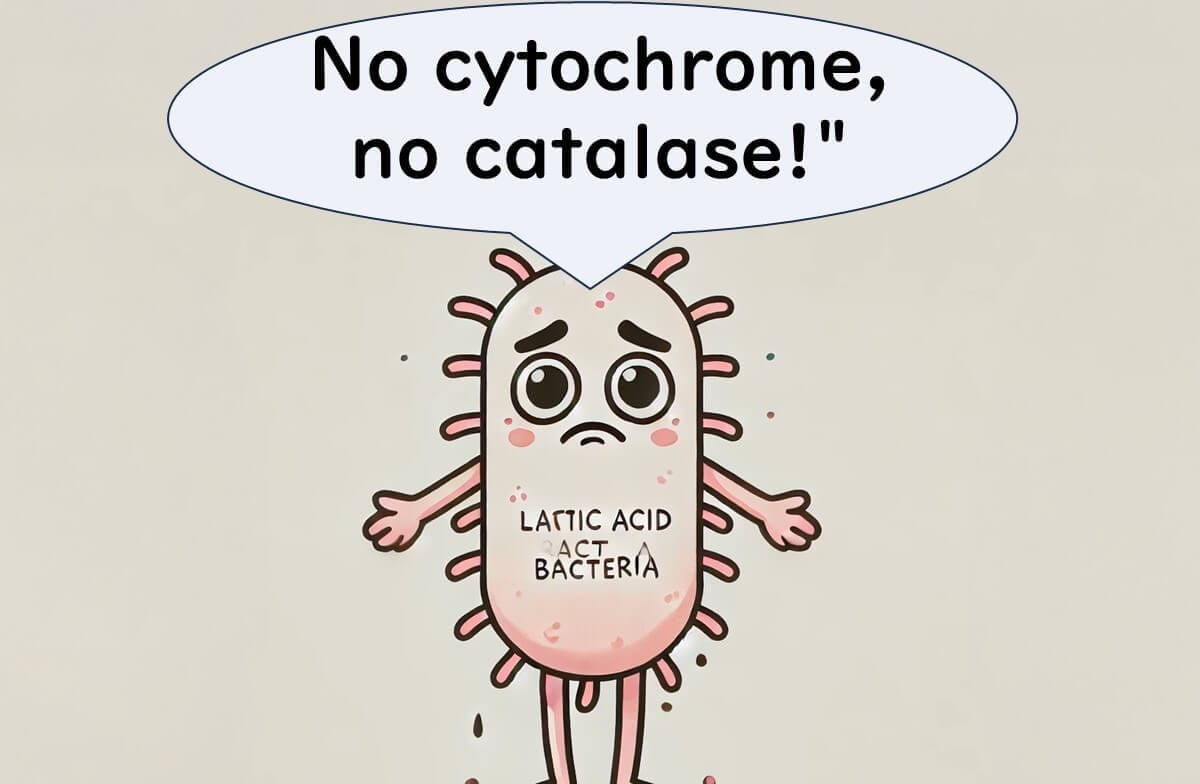
In summary, lactic acid bacteria’s lack of heme is due to their reliance on lactic acid fermentation over aerobic respiration. This metabolic choice means they have no need for the electron transport chain or cytochrome, thus eliminating the need for heme. Consequently, they cannot produce catalase but have evolved an alternative mechanism with NADH peroxidase to handle oxidative stress, underscoring their unique place in the microbial world.
Related posts:
Using the Catalase Test to Identify Lactic Acid Bacteria among Gram-Positive Microorganisms (3) Hello everyone! In this article, we’ll uncover a fascinating aspect...
The Unique Metabolic Characteristics of Lactic Acid Bacteria (3) Welcome to our in-depth exploration of the unique metabolic traits...
Overflow Metabolism and the Unique Adaptations of Lactic Acid Bacteria (3) In this article, we’ll explore the fascinating phenomenon of overflow...

Discover expert-led lessons in food microbiology designed for professionals and beginners alike.

Author of this Blog: Bon Kimura
Bon Kimura, Professor Emeritus at Tokyo University of Marine Science and Technology (TUMSAT), specializes in food microbiology. He obtained his PhD from Kyoto University and became a professor at TUMSAT in 2006, serving as Dean of the Faculty of Marine Science from 2012-2015. Kimura has published over 200 international papers on food safety, pathogens, and spoilage bacteria. He has received multiple awards, including the Japanese Society for Food Microbiology Award (2019). Kimura also served as an editor for the International Journal of Food Microbiology from 2012 to 2024, where he was the principal reviewer for 1,927 papers.

Copyright © Introduction to Food Microbiology and Safety All Rights Reserved.