Introduction to Food Microbiology and Safety
Gram Staining and Microbial Properties: A Comprehensive Overview
Understanding the fundamental differences between Gram-positive and Gram-negative bacteria is critical for professionals and students in food microbiology. This page serves as a comprehensive guide to explore these differences and their practical implications in food safety, hygiene management, and microbial behavior. Below, you'll find links to detailed sections covering everything from survival characteristics to infection mechanisms and Gram staining techniques. Dive deeper into the fascinating world of microbiology!
Welcome to the master page of "The Extraordinary Relationship between Gram Staining and Microbial Properties". This article is divided into several detailed sections for better readability and deeper exploration. Click on the links below to explore each topic:
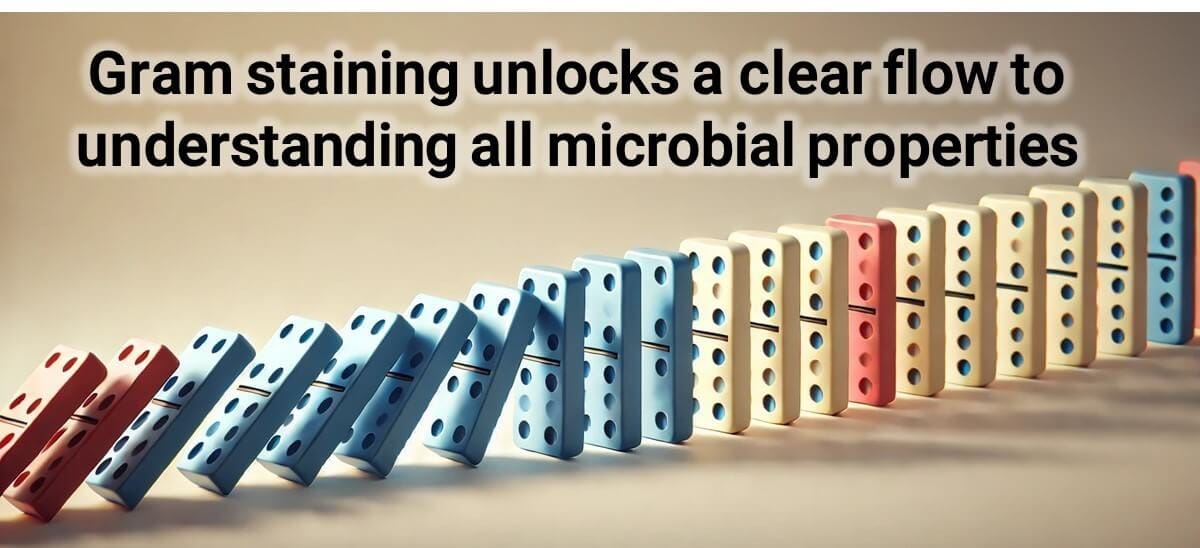
A Comprehensive Guide to Gram-Negative and Gram-Positive Bacteria: Key Differences and Environmental Adaptations
This guide provides an in-depth exploration of the fundamental differences between Gram-negative and Gram-positive bacteria, focusing on their structural, chemical, and environmental adaptations.
Survival Strategies of Gram-Positive and Gram-Negative Bacteria in Dry and Wet Environments
This section examines how Gram-positive and Gram-negative bacteria adapt and survive in various environments, emphasizing their unique strategies for thriving in both dry and wet conditions.
Structural Differences in Gram-Positive and Gram-Negative Bacteria: Key Insights for Food Safety
This article highlights the structural distinctions between Gram-positive and Gram-negative bacteria and explains how these differences impact food safety protocols and microbial risk management.
Chemical Resistance: Structural Differences Between Gram-Positive and Gram-Negative Bacteria
This page explores how the structural properties of Gram-positive and Gram-negative bacteria influence their resistance to chemical agents, providing practical insights for controlling microbial contamination.
Infection-Type and Toxin-Type Foodborne Pathogens
This section categorizes foodborne pathogens into infection-type and toxin-type, discussing their modes of transmission, symptoms, and implications for food safety.
Understanding the Differences between Gram-Positive and Gram-Negative Bacteria: A Summary of Key Learnings
A concise summary of the critical differences between Gram-positive and Gram-negative bacteria, this section offers practical takeaways for microbiology beginners and professionals alike.
Gram Staining: Principles, Methods, and Procedures
This page introduces the Gram staining technique, its principles, and step-by-step procedures, making it an essential resource for understanding bacterial classification in microbiology.
Related posts:
Microorganisms and Humanity: A Brief Encounter in Earth's 4-Billion-Year History When studying food microbiology, it’s easy to focus solely on...
Food Microbiology: Understanding the Human-Microbe Battle In this article, aimed at beginners in the fields of...
Homo- and Heterofermentative Lactic Acid Bacteria When it comes to lactic acid bacteria, we can divide...
A Comprehensive Guide to Gram-Negative and Gram-Positive Bacteria: Key Differences and Environmental Adaptations Understanding the unique characteristics of Gram-negative and Gram-positive bacteria is...
Discover expert-led lessons in food microbiology designed for professionals and beginners alike.

Author of this Blog: Bon Kimura
Bon Kimura, Professor Emeritus at Tokyo University of Marine Science and Technology (TUMSAT), specializes in food microbiology. He obtained his PhD from Kyoto University and became a professor at TUMSAT in 2006, serving as Dean of the Faculty of Marine Science from 2012-2015. Kimura has published over 200 international papers on food safety, pathogens, and spoilage bacteria. He has received multiple awards, including the Japanese Society for Food Microbiology Award (2019). Kimura also served as an editor for the International Journal of Food Microbiology from 2012 to 2024, where he was the principal reviewer for 1,927 papers.
Copyright © Introduction to Food Microbiology and Safety All Rights Reserved.