Introduction to Food Microbiology and Safety
The Critical Role of Enrichment Culture in PCR Food Testing
Enrichment culture plays a pivotal role in the accuracy and reliability of PCR testing in food microbiology. This page delves into the essentials of enrichment cultures, highlighting their importance in amplifying target bacteria to detectable levels, overcoming growth challenges, and addressing blind spots during the enrichment process. By mastering these concepts, food safety professionals can enhance the effectiveness of PCR-based microbial detection.
Precautions for Enrichment Culture
In traditional culture methods, the primary challenge is increasing the proportion of target bacteria within a mix of other microorganisms to successfully isolate the desired bacteria on a final detection medium. This makes selective enrichment cultures with additives an essential tool in microbial testing.
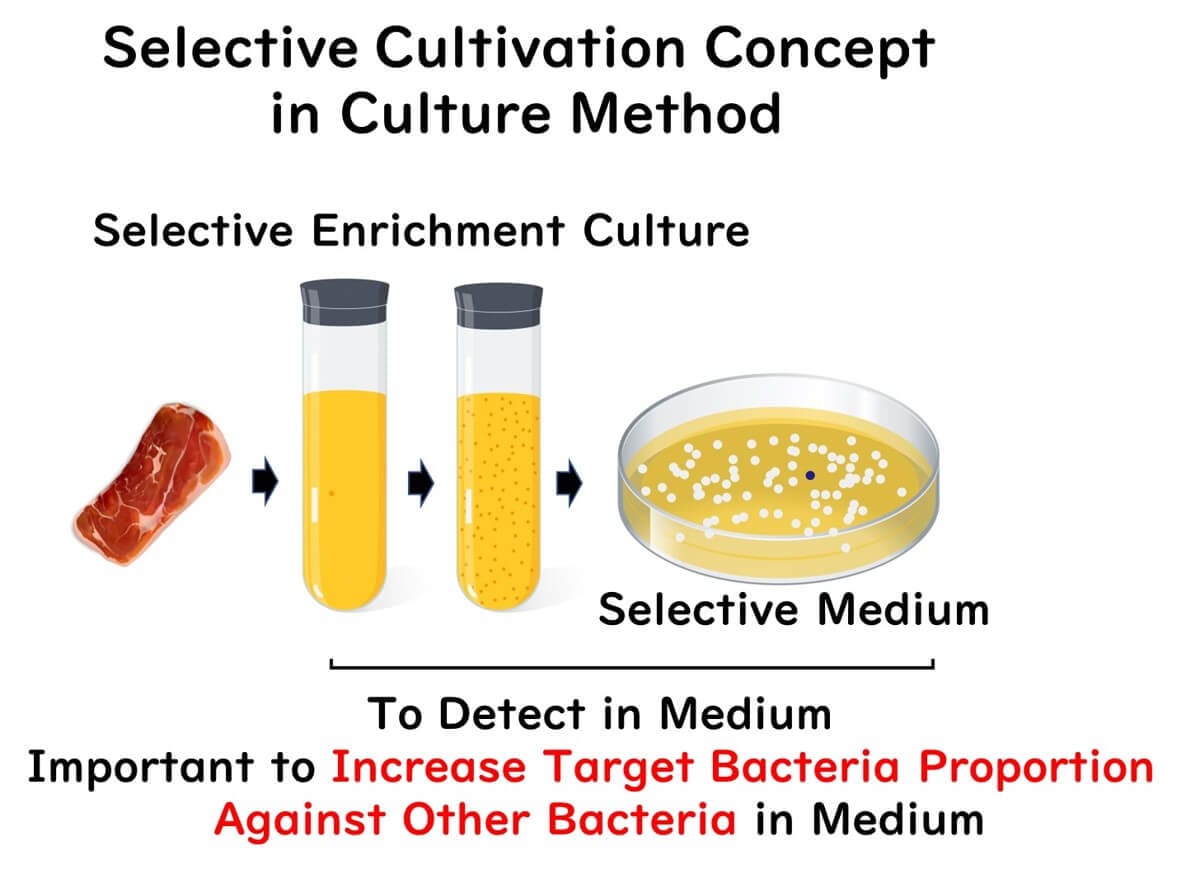
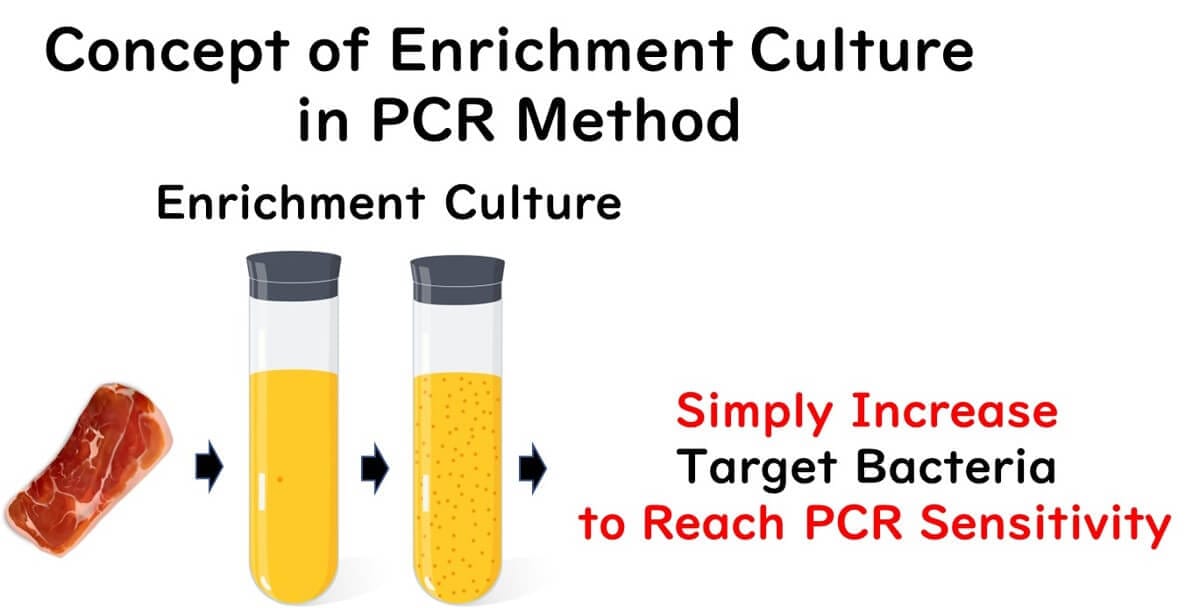
In contrast, PCR methods offer a different approach. By focusing on the absolute number of target bacteria during enrichment, PCR does not rely on the relative proportion of background microorganisms. This simplifies the enrichment process for genetic testing, allowing even non-selective media, such as peptone water, to serve as effective enrichment agents.
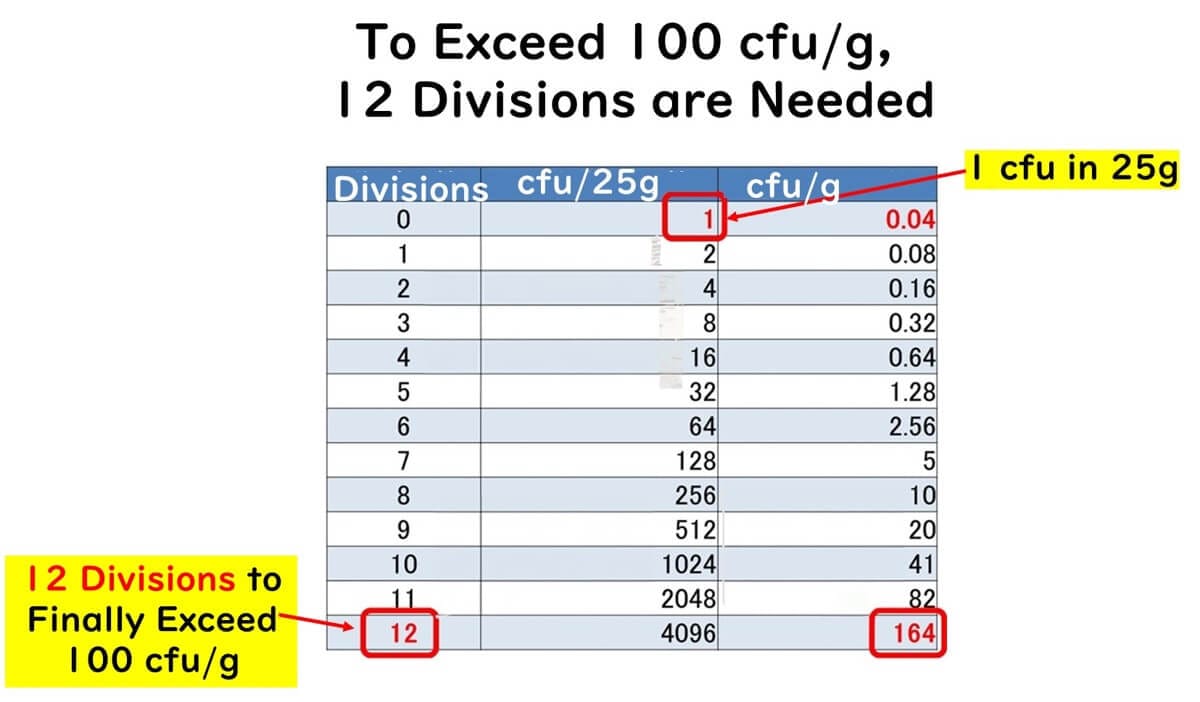
Generally, the detection sensitivity of PCR in food is approximately 100 cfu/g. To achieve this level, the target microorganism must undergo around 12 divisions, starting from one cell in a 25g food sample. This underscores the importance of proper enrichment to ensure accurate detection.
Note: For a detailed explanation of why the detection sensitivity of PCR is 100 cfu/g in food, refer to the article "Real-Time PCR in Food Microbiology: Challenges and Applications."
Blind Spots During Enrichment for PCR
As previously mentioned, PCR detection requires target bacteria to undergo approximately 12 divisions to reach the sensitivity threshold of the method. This is often achievable using simple enrichment media such as TSB (Tryptic Soy Broth) or universal peptone liquid media, which eliminates the need for selective agents in some cases.
However, even with this streamlined approach, there are significant blind spots to consider:
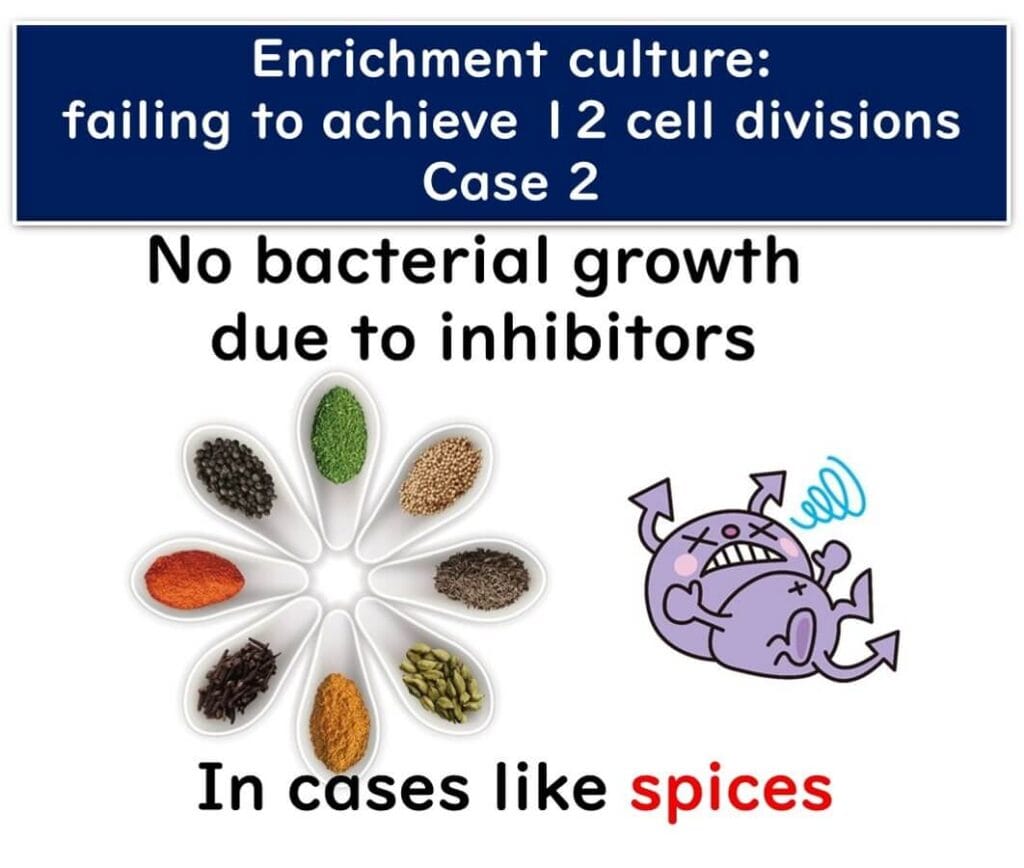
1.Growth Inhibition: Certain food ingredients, such as spices, may inhibit the growth of target bacteria during the enrichment process. This can reduce the likelihood of detecting the bacteria, even if they are present in the sample.
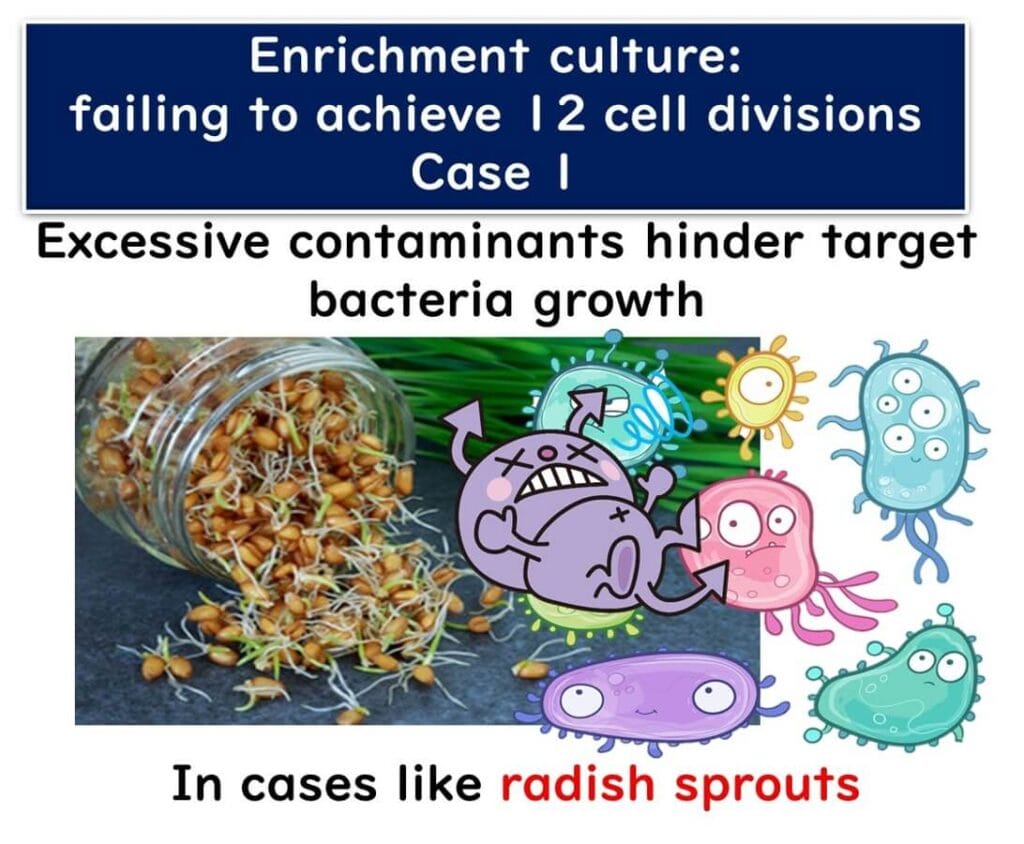
2.High Background Bacteria: In samples like radish sprouts, the presence of excessive competing bacteria can prevent adequate proliferation of the target bacteria, making detection difficult.
These challenges highlight the need for special precautions in PCR testing to address these two scenarios effectively.
Related posts:
Real-Time PCR in Food Microbiology: Challenges and Applications Real-Time PCR has revolutionized diagnostic testing in various fields, including...
PCR Testing in Food Microbiology: Key Principles, Benefits, and Applications PCR testing in food microbiology offers unmatched advantages over traditional...
Mastering PCR Primer Design for Accurate Microbial Detection in Food Microbiology PCR primer design is a cornerstone of accurate and reliable...
Understanding the Limits of PCR Detection in Food Microbiology PCR detection is a powerful tool in food microbiology, offering...

Discover expert-led lessons in food microbiology designed for professionals and beginners alike.

Author of this Blog: Bon Kimura
Bon Kimura, Professor Emeritus at Tokyo University of Marine Science and Technology (TUMSAT), specializes in food microbiology. He obtained his PhD from Kyoto University and became a professor at TUMSAT in 2006, serving as Dean of the Faculty of Marine Science from 2012-2015. Kimura has published over 200 international papers on food safety, pathogens, and spoilage bacteria. He has received multiple awards, including the Japanese Society for Food Microbiology Award (2019). Kimura also served as an editor for the International Journal of Food Microbiology from 2012 to 2024, where he was the principal reviewer for 1,927 papers.

Copyright © Introduction to Food Microbiology and Safety All Rights Reserved.