Introduction to Food Microbiology and Safety
E. coli O157: Why Only Humans Suffer Foodborne Illness While Cattle Remain Unharmed?
As a university professor specialising in food microbiology, I often address a compelling question: Why does E. coli O157 cause foodborne illness in humans while cattle remain unharmed? This curious phenomenon challenges our human-centric perspective on microbial relationships. In this article, we will delve into the complexities of this issue, exploring how E. coli O157 interacts with its hosts within the broader context of Earth's biological diversity. Join me as we uncover the interconnected narratives of microbes and their hosts, revealing insights that might shift our understanding of foodborne illnesses.
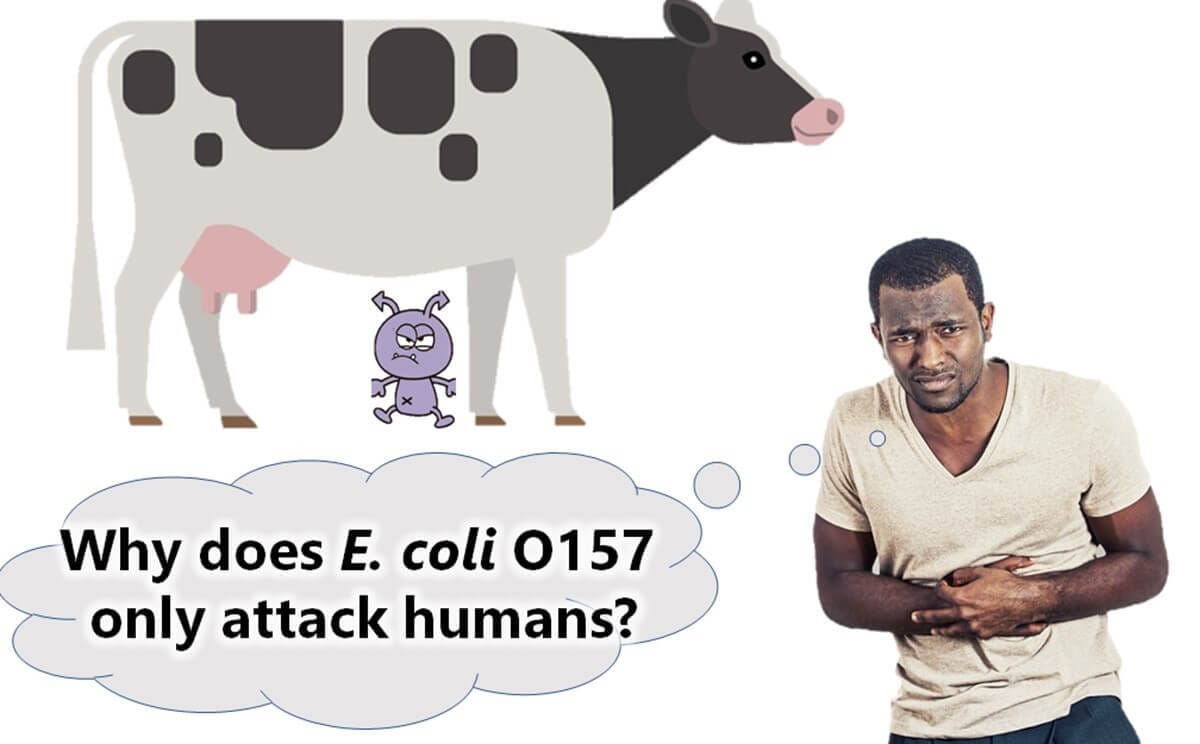
Why does E. coli O157 only attack humans and not cattle?
This question often puzzles many. Why can E. coli O157 thrive in a cow's gut without causing harm, yet cause severe gastroenteritis in humans? Is there an intentional malice behind this? However, this human-centric view misses the broader picture of Earth's biological diversity.
To understand this relationship better, we must consider the historical context of microorganisms and their hosts. Notably, microorganisms' relationships with cattle and pigs far predate those with humans.
Humans are relatively newcomers in the grand scheme of microbial history. If we imagine microbial history as spanning an entire year, humans appeared only around 10 PM on December 31st. This timeline underscores our recent interactions with microbes.For this detailed explanation, please see the below article.
Our encounters with microbes are still unfolding. When different life forms encounter each other for the first time, misunderstandings may arise.

For instance, if a microbe like E. coli invades a human body, the body might not be prepared to defend against it, leading to potential illness.

As time passes, humans develop immune responses to these invaders. The microbes, in turn, evolve to evade our immune attacks. This ongoing struggle represents a complex dance of adaptation and survival between hosts and pathogens.
A Trench Warfare Analogy: Understanding the Relationship Between Humans and Pathogens
We can compare the ongoing struggle between pathogens and their hosts to the trench warfare of World War I. The advent of the machine gun prior to the war made traditional troop charges highly perilous. A headlong rush would result in troops being mowed down by machine gun fire. Consequently, both sides dug trenches, leading to a protracted stalemate where victory was elusive.
The relationship between pathogens and their hosts resembles the Western Front of World War I.
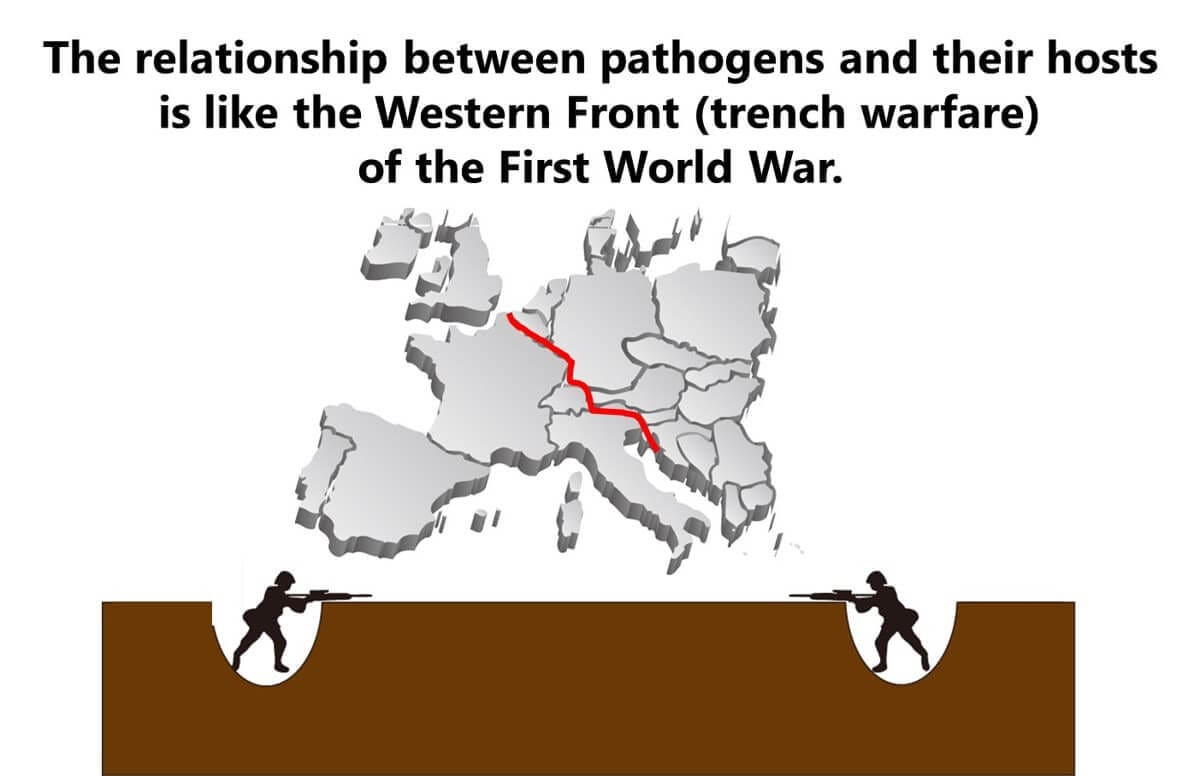
In the same vein, when both sides in a conflict continuously develop countermeasures, it becomes increasingly difficult for one side to achieve a decisive victory over the other. This analogy effectively illustrates the dynamic between pathogenic E. coli and cattle.
Microbiology's Insights: What Have We Learned in 150 Years?
Furthermore, the field of microbiology has evolved significantly over the past 150 years, progressing through several key stages:
Louis Pasteur, a Frenchman specializing in food and brewing microbiology, refuted the theory of spontaneous generation with his swan-neck flask experiment, thereby kickstarting the field of microbiology.
Across the border in Germany, medical researcher Robert Koch made use of Pasteur's discoveries to isolate various disease-causing microbes that were previously thought to be mysterious illnesses. He revealed that the cause of these diseases was actually microorganisms, which significantly advanced the field of medicine in Germany. Thanks to Koch, the original texts of many medical books are in German.
In the 1920s, Briton Alexander Fleming discovered antibiotics, making it possible to combat a wide range of pathogenic bacteria.
While the foundation of microbiology was laid in the realm of food microbiology by Pasteur, the field has predominantly progressed in the area of medical microbiology over the past 150 years. Although brewing microbiology has also seen advancements, the primary focus remains on human-centric perspectives. But remember, this is essentially microbiology from a human-centered point of view.
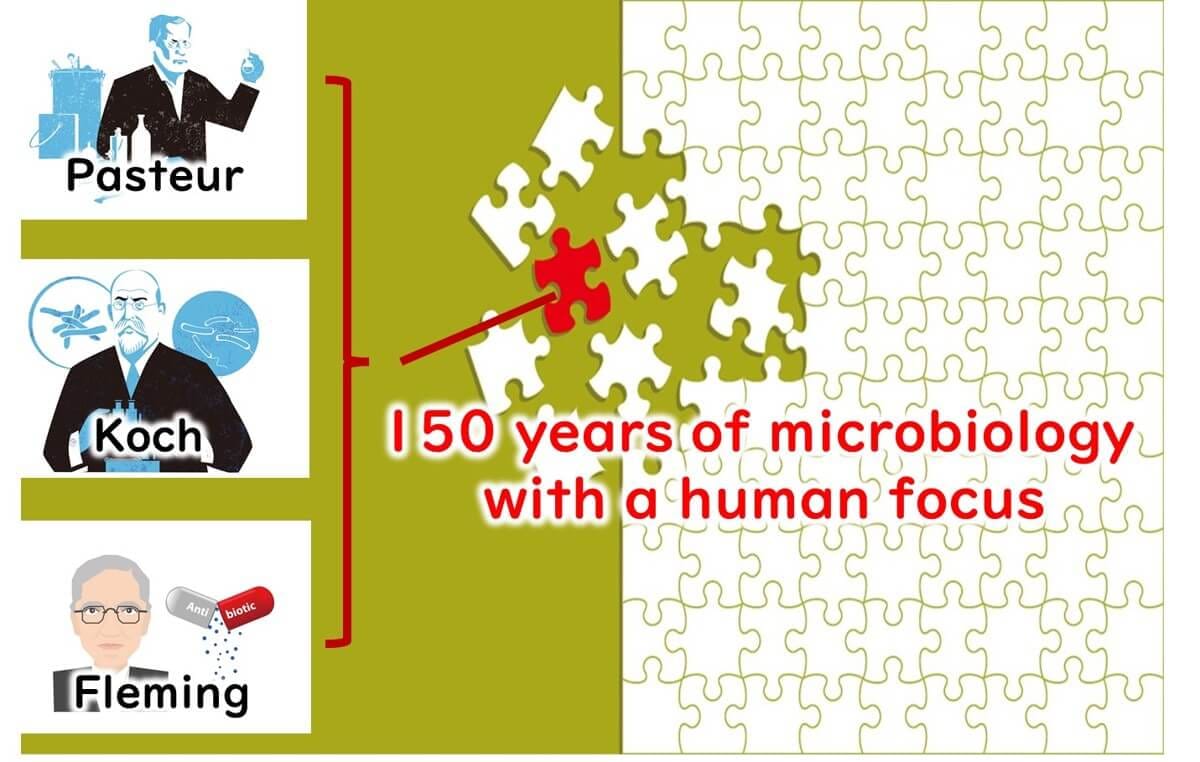
Within the short span of 150 years of microbiology, there has been very little research on the relationship between microorganisms and other living beings that don't relate to humans. Although there has been research on pathogens of livestock, which are important to humans, almost no research has been conducted on the issues of pathogens between living organisms that are completely unrelated to humans. For example, there might be various diseases in cockroaches. Even if you wanted to research these now and applied for research funding, it's likely that no research institution in the world would grant it. As a research science, this is extremely interesting, perhaps even fitting for an Ig Nobel Prize, but unfortunately, it's very difficult to acquire funding for such studies.
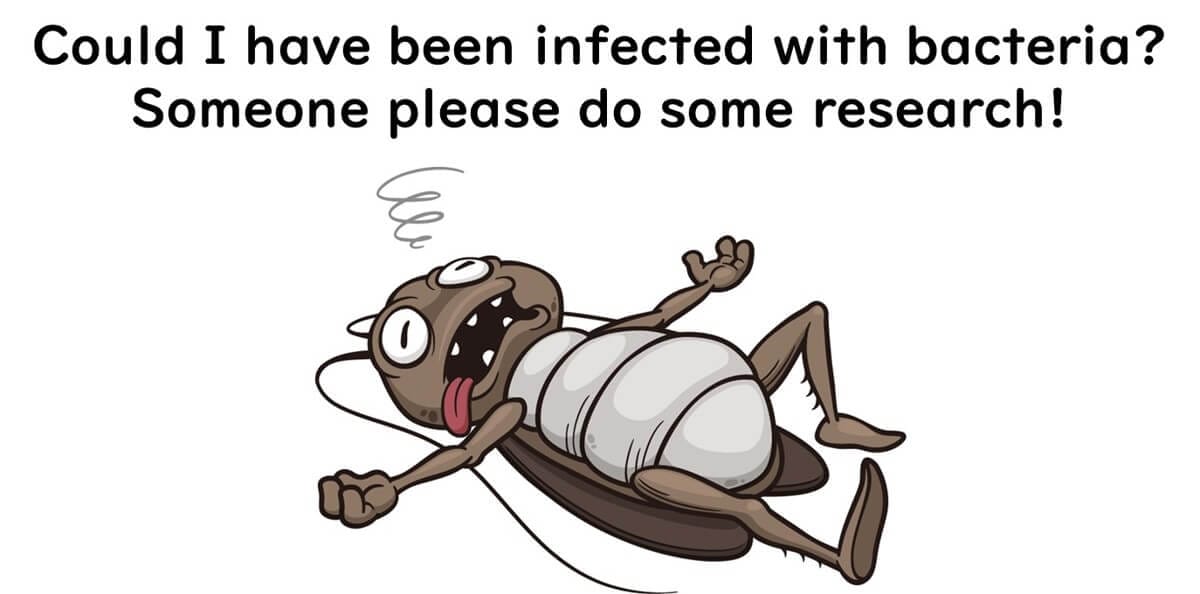
So, to the central question of this article - are pathogenic microbes challenging humans? - we can respond as follows:
his perception arises because our studies predominantly focus on microbes that impact humans from a human-centered viewpoint. In reality, however, humans may be inadvertently targeted by these microbes amid the complexity of interactions, and these microbes might have other hosts. Unfortunately, this remains uncharted territory due to a lack of dedicated research.
Related posts:
Microorganisms and Humanity: A Brief Encounter in Earth's 4-Billion-Year History (3) When studying food microbiology, it’s easy to focus solely on...
Organising Gram-Negative and Gram-Positive Bacteria: A Guide for Food Microbiology (3) In recent years, species identification based on 16S rRNA gene...
Can Salmonella and E. coli O157 Spread in Toilets or Through Conversation? Understanding Foodborne Bacteria Transmission (3) Welcome! In this article, we delve into some essential questions...
Lactic Acid Bacteria: From Fermentation Heroes to Food Spoilage Villains (3) Lactic acid bacteria are celebrated for their role in creating...

Discover expert-led lessons in food microbiology designed for professionals and beginners alike.

Author of this Blog: Bon Kimura
Bon Kimura, Professor Emeritus at Tokyo University of Marine Science and Technology (TUMSAT), specializes in food microbiology. He obtained his PhD from Kyoto University and became a professor at TUMSAT in 2006, serving as Dean of the Faculty of Marine Science from 2012-2015. Kimura has published over 200 international papers on food safety, pathogens, and spoilage bacteria. He has received multiple awards, including the Japanese Society for Food Microbiology Award (2019). Kimura also served as an editor for the International Journal of Food Microbiology from 2012 to 2024, where he was the principal reviewer for 1,927 papers.

Copyright © Introduction to Food Microbiology and Safety All Rights Reserved.