Course curriculum
introduction-to-video-course
Course Overview
1-1 Let’s start by understanding Microorganisms are invisible to the human eye
1-2 The ancestor of bacteria The story of the birth of prokaryotic cells
1-3 The story of the birth of eukaryotic cells
1-4 The divergence of animal and plant destinies
1-5 The relationship between yeast, mould, and bacteria
1-6 How do we measure the number of microorganisms
1-7 Pure culture isolation methods for microorganisms (image)
1-8 How is Gram staining done
Chapter 1 Slides with note-taking sections (PDF format)
2-1 Gram staining and bacterial characteristics are all interconnected
2-2 Toxin-producing and infectious types of food poisoning bacteria
2-3 Summary of Gram staining, growth environments, and characteristics
2-4 Application of fundamental understanding to interpreting medium components
2-5 Microbiology toolbox (Gram-negative bacteria)
2-6 Oxygen and microbial metabolism, and the OF test
2-7 Oxidase test
2-8 Microbiology toolbox (Gram-positive bacteria)
2-9 The significance of total viable counts
Chapter 2 Slides with note-taking sections (PDF format)
3-1 Pseudomonas
3-2 Coliforms and E.coli
3-3 Micrococcus
3-4 Bacillus subtilis
3-5 Lactic acid bacteria
3-6 Yeasts, moulds, and food hygiene
Chapter 3 Slides with note-taking sections (PDF format)
4-introduction
4-1-E-coli
4-2-Salmonella
4-3-norovirus
4-4Campylobacter
4-5-Listeria-monocytogenes
4-6-Clostridium-botulinum
4-7-Staphylococcus-aureus
4-8-Vibrio-parahaemolyticus
4-9-Clostridium-perfringens
4-10-Baci;;is-cereus
Chapter 4 Slides with note-taking sections (PDF format)
5-introduction
5-1 The significance of hand washing
5-2 The importance of cleaning and disinfection
5-3 Basic knowledge of cleaning How not to fail in cleaning
5-4-ethanol
5-5-sodium-hypochlorite
5-6-acid-electrolized-water
5-7-peracetic acid
5-8-benzalkonium-chloride
5-9-drug-resistance
5-10-biofilm
Chapter 5 Slides with note-taking sections (PDF format)
6-1-pasteurization
6-2-D-value
6-3-Z-value
6-4 -outline-figure-D-and-F
6-5-dry-food-heat-sterilization
6-6 Retort sterilisation
6-7 Important considerations in general sterilisation and control
7-1 temperature
7-2 feezing
7-3-pH
7-4-water-activity
7-5 preservatives
Chapter 7 Slides with note-taking sections (PDF format)
8 final thoughts
About this course
$297.00
67 lessons
15.5 hours of video content
Course access for 180 days
Discover your
potential, starting today
Instructor
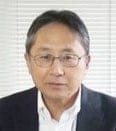
Bon Kimura
Instructor
Bon Kimura is Professor Emeritus of Food Science at Tokyo University of Marine Science and Technology (TUMSAT). After graduating from Kyoto University in 1979, he completed his PhD there and has worked in food microbiology at national universities. His research spans food safety, foodborne pathogens, spoilage bacteria, and enterobacteria, with over 200 international peer-reviewed publications. He served as President of the Japanese Society for Food Hygiene (2017-2019) and Vice-President of the Japanese Society for Food Microbiology (2020-2022). From 2011 to 2024, he has been an editor for the International Journal of Food Microbiology, overseeing the peer review of 1,895 articles